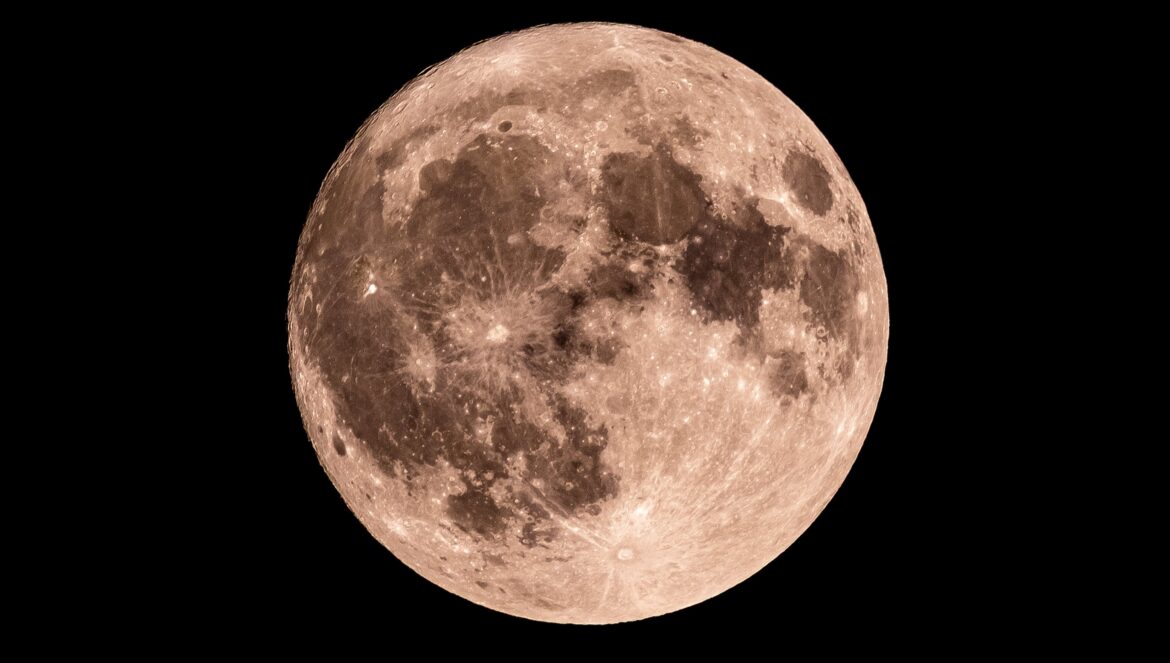


You don’t need lots of fancy equipment to get a good look at the Moon. A clear sky can be enough to reveal plenty of detail across its surface. So, what could you see when you look up tonight? Keep reading to find out.
What is today’s Moon phase?
As of Sunday, Aug. 30, NASA’s Daily Moon Guide tracker tells us the Moon is in Waning Gibbous phase, with 95% of its surface visible.
Tonight with just your naked eye, you’ll be able to see the Mare Serenitatis, the Copernicus Crater, and the Oceanus Procellarum. If you do have viewing equipment, such as binoculars, you’ll also see the Mare Frigoris, the Archimedes Crater, and the Apennine Mountains. If you have access to a telescope, you’ll also be able to see the Apollo 15 and 16 landing spots, and the Rima Ariadaeus.
When is the next Full Moon?
The next Full Moon will take place on September 26.
What are Moon phases?
The Moon’s appearance changes throughout the month as it moves through its different phases. It takes roughly 29.5 days for the Moon to complete one full cycle as it orbits Earth, according to NASA. The phase we see depends on the Moon’s position relative to the Sun and Earth, which determines how much of its sunlit side is visible to us. Over the course of the cycle, the Moon changes from a slim crescent to a half Moon and eventually a Full Moon, before beginning the process again.
The eight phases are:
New Moon – The Moon is between Earth and the sun, so the side we see is dark (in other words, it’s invisible to the eye).
Waxing Crescent – A small sliver of light appears on the right side (Northern Hemisphere).
First Quarter – Half of the Moon is lit on the right side. It looks like a half-Moon.
Waxing Gibbous – More than half is lit up, but it’s not quite full yet.
Full Moon – The whole face of the Moon is illuminated and fully visible.
Waning Gibbous – The Moon starts losing light on the right side. (Northern Hemisphere)
Third Quarter (or Last Quarter) – Another half-Moon, but now the left side is lit.
Waning Crescent – A thin sliver of light remains on the left side before going dark again.
Source: https://mashable.com/science/moon-phase-today-aug-30-2026