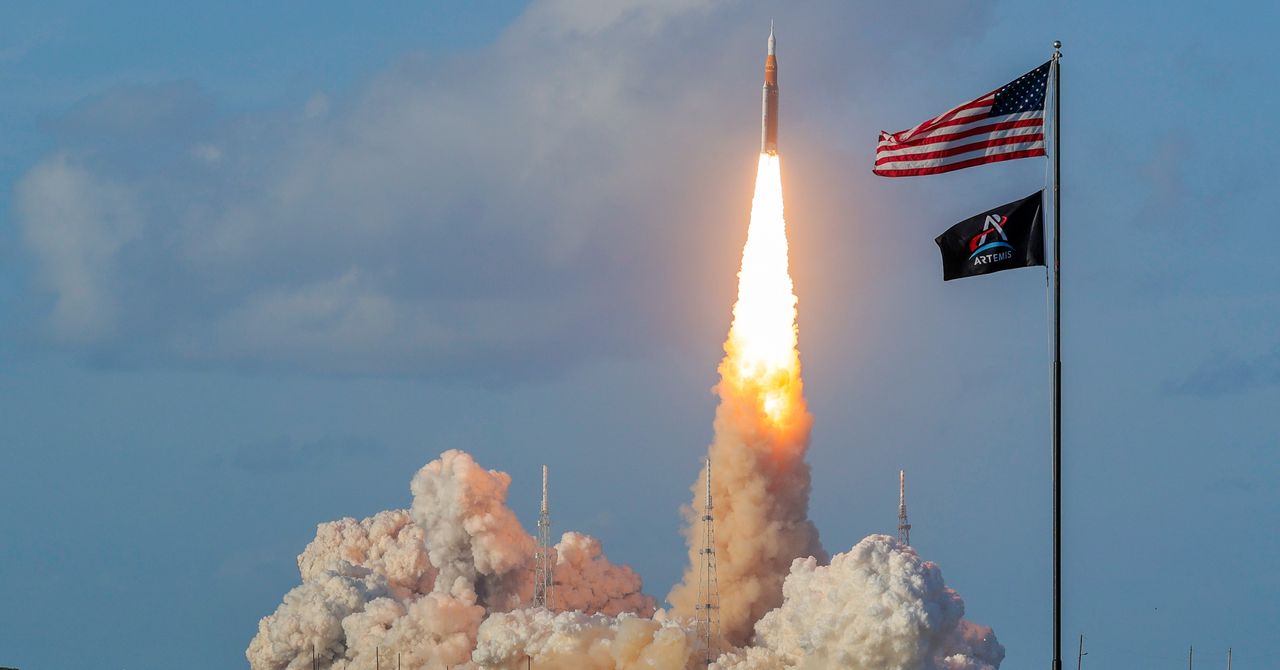
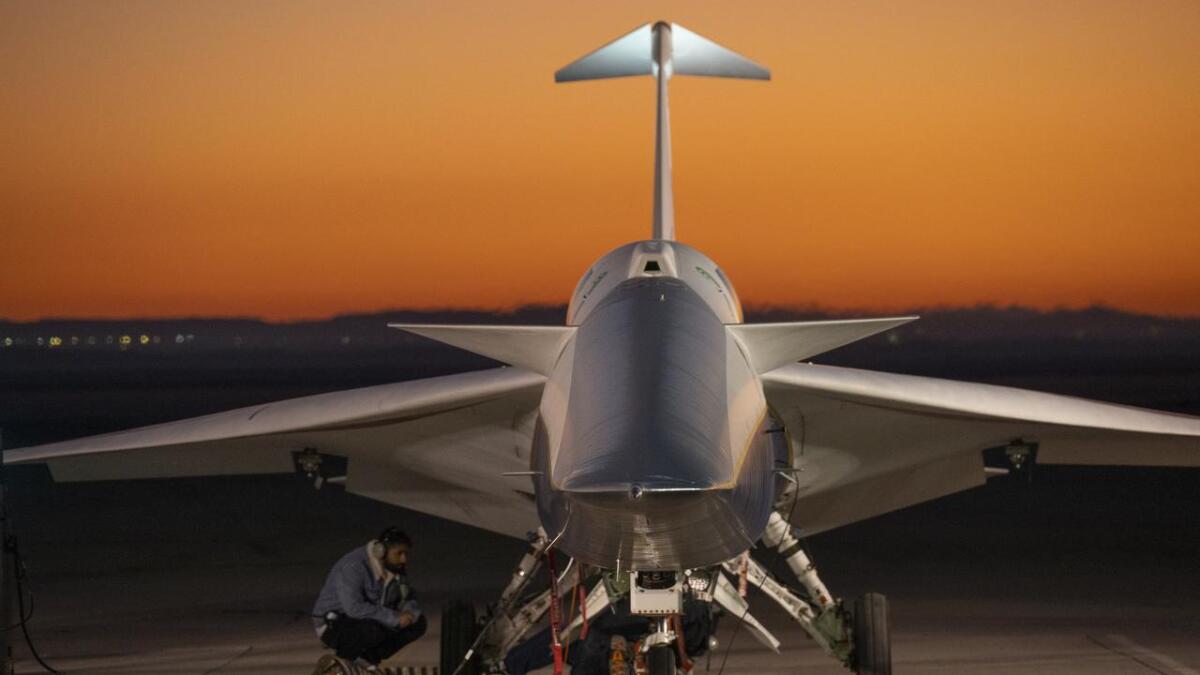
Nothing seemed amiss as NASA‘s experimental X-59 supersonic jet touched down after its second test in the air, smoothly coasting onto the runway.
But the sleek, needle-nosed airplane had completed only nine minutes in the air on Friday, March 20, before a cockpit warning light forced an early landing. That warning was separate from a caution light that occurred during an earlier takeoff attempt just before 10 a.m. P.T., said Cathy Bahm, project manager at NASA’s Armstrong Flight Research Center.
The brief flight left from Edwards Air Force Base in California at 10:54 a.m. P.T. marked only the second time the aircraft had flown. While the team originally planned for about an hour, leaders stressed that even short flights provide new data for moving the project forward. You can watch the landing in the video below.
Bob Pearce, who heads NASA’s aeronautics research, said the team made the right call to cut the flight short on Friday. The agency expects to find and fix issues at this stage of an X‑plane, an aircraft the U.S. builds to test new flight technologies and ideas.
“Sometimes it’s easy to forget that building this kind of experimental aircraft means creating something that never existed before,” Pearce said during a news conference. “As far as X-planes go, it’s not unusual.”
The X-59 is part of a long-term effort to change how fast commercial airplanes fly over land. Traditional supersonic aircraft create a loud boom when they break the sound barrier, which is why the U.S. government bans routine supersonic passenger flights over populated areas. NASA and its contractor, Lockheed Martin, built the X-59 to fly faster than sound while producing only a “thump,” with the goal of providing regulators and the industry with the evidence needed to reconsider the restrictions.
At the kind of supersonic speeds NASA wants to target for the X-59 — around 925 mph — a nonstop flight from New York to L.A. could take less than three hours. Today’s commercial airlines typically cruise at about 550 mph on that route, so passengers tend to spend about 5 to 6 hours crossing the country.
Mashable Light Speed
A sonic boom occurs when a plane flies faster than the speed of sound, compressing pressure waves into a single shock wave that hits the ground like a sudden explosion of air. NASA designed the X‑59 so its shape spreads those pressure changes out along the aircraft, turning that single sharp shock into a series of smaller pulses.
Residents below didn’t hear the X-59’s thump during either of the first two test flights — and they weren’t supposed to. The plane never flew fast enough either time to make it. Both flights intentionally stayed at subsonic speeds. NASA is using these early tests to shake out systems and watch how the plane handles.
During Friday’s test, the aircraft was supposed to fly for roughly an hour, reaching a cruising speed of 230 mph at 12,000 feet before accelerating to 260 mph at 20,000 feet. The plane never exceeded 230 mph, officials said.
“I certainly hoped to have more to talk about than nine minutes of flight,” said Less, who flew the X-59 for the first time on this mission. “Although I had not intended to have to land quite as urgently for my first landing, the plane performed beautifully.”

NASA test pilot Jim ‘Clue’ Less sits inside the cockpit of the experimental X-59 quiet supersonic jet at NASA’s Armstrong Flight Research Center in Edwards, California.
Credit: NASA / Jim Ross
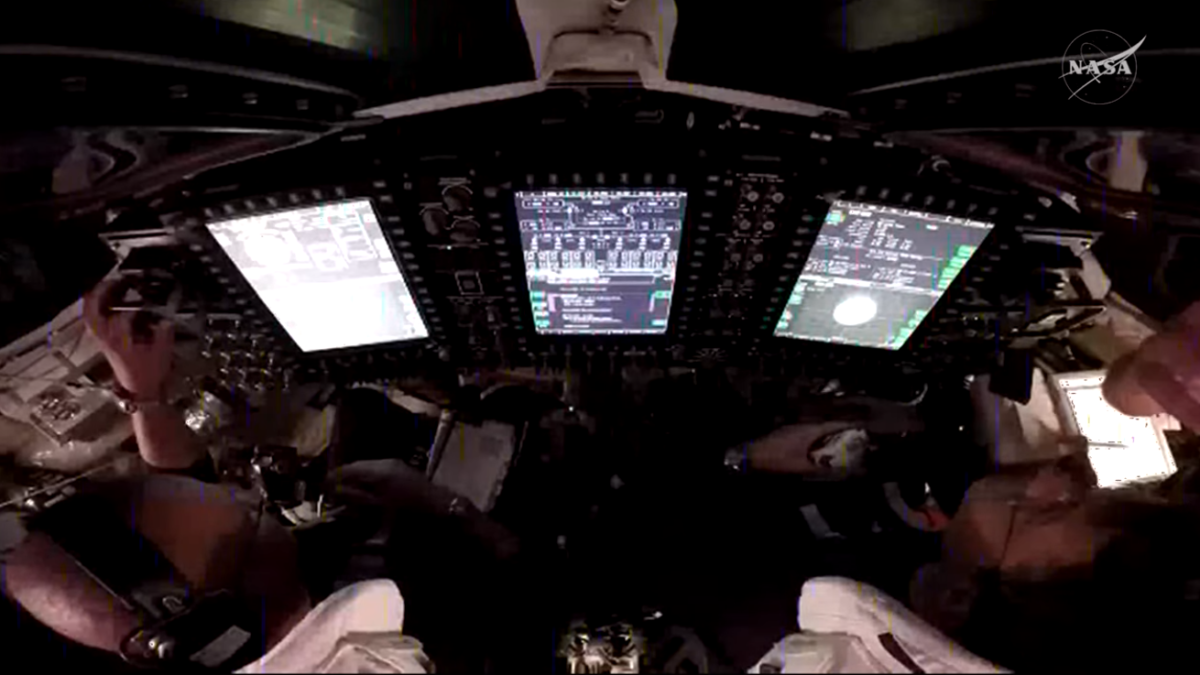
He described the aircraft as handling just like its simulators. Over hundreds of hours of test runs in the simulator, Less and other test pilots had practiced with the unconventional vision system that combines images from cameras into a high-definition display. But this was his first time flying without the traditional front window.
The long nose shape that helps soften the sonic boom doesn’t leave room for a standard cockpit windscreen. But in some cases, the system offers better visibility than the naked eye, he said. If a pilot is facing into the sun, for example, image processing can reduce glare and improve contrast.
“It really felt comfortable,” he said. “Even though I wasn’t seeing out the front, I could see out the sides and match that up.”
More than 100 test flights are planned. NASA intends to gradually push toward higher, faster flights before testing those muffled booms over towns.