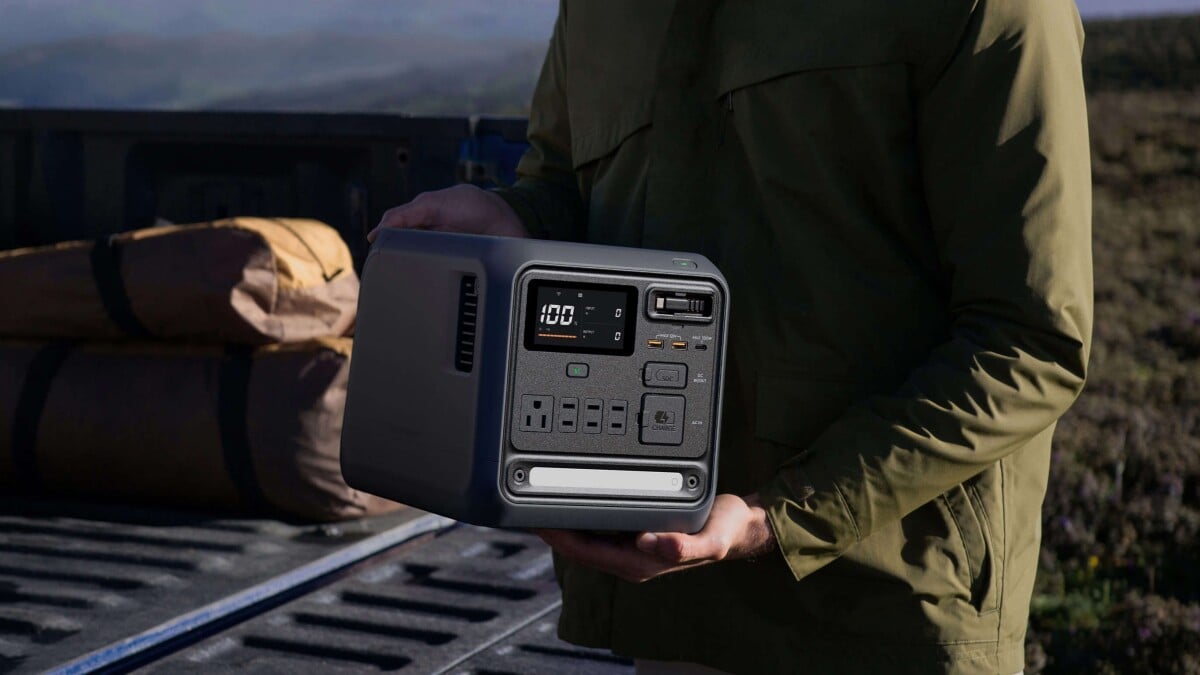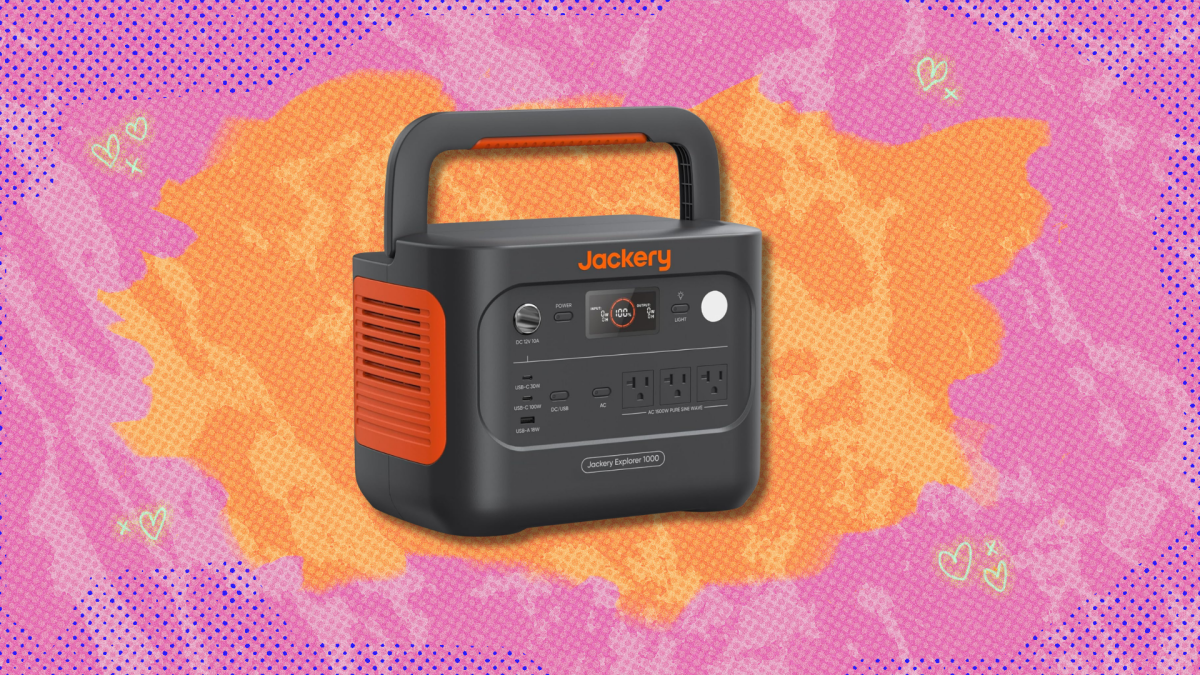
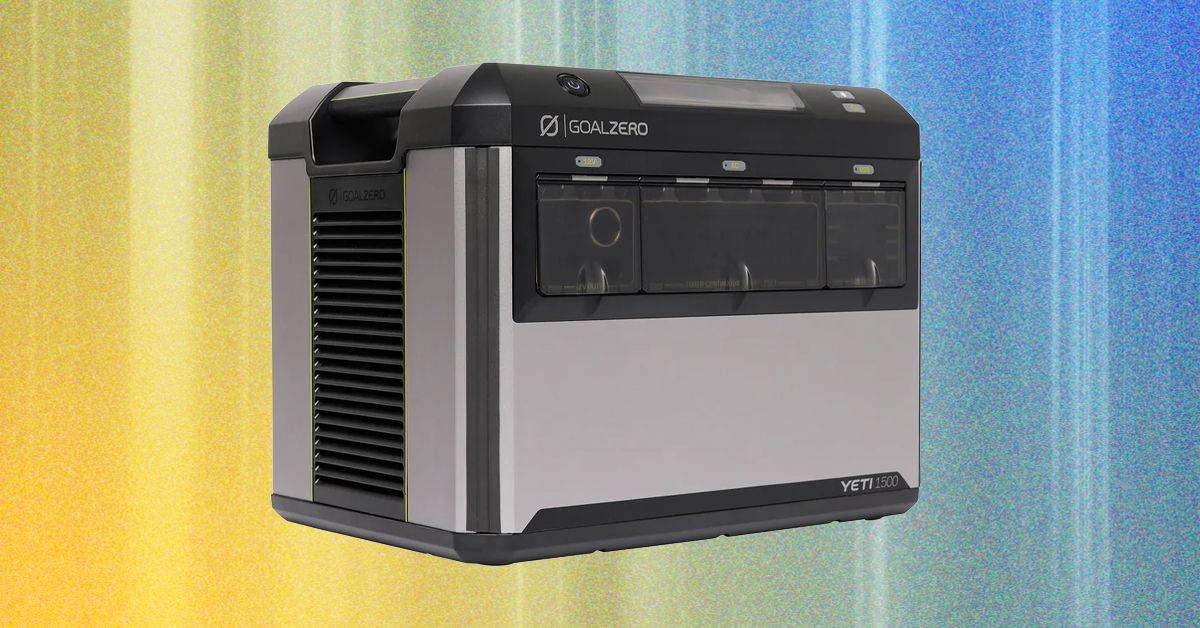
All those ports are fairly standard for a power station in this class, and similar to what was on the previous model—although the 140-W USB port is new and very nice to have. Where the new Yeti 1500 shines is the 12-V charging options, which include a high-power 12-V port capable of 30 amp output. That’s enough for most van and overlanding vehicle power systems, meaning you can tie the Yeti 1500 directly to your house power 12-V distribution panel. There’s also standard Anderson connector outputs and a cigarette-lighter-style outlet available.
There are three ways to charge the Yeti 1500. There’s AC wall power, which can charge at up to 1,800 watts, getting you from 0 to 100 percent in just over an hour. (There’s a switch to slow this down to 1,500 W if you’re plugged into a campground pole, which typically can’t handle the full draw.) You can also hook the Yeti up to a max of 900 watts of solar panels. There are both 8-mm inputs and HPP inputs for Goal Zero solar panels. You don’t need Goal Zero panels, though; you can use just about anything so long as you get the right adapters and stick within the charging limits (I use an adapter like this to plug just about any solar panel into just about any power station/charger). The rear charging panel is also where you’ll find the ground lug for semi-permanent installs in a vehicle or off-grid tiny home.
Goal Zero’s Yeti app allows you to control the system from your phone, potentially from the other side of the world if you have the battery connected to your Wi-Fi. I opted for direct connection via Bluetooth, bypassing the network, since I don’t always have my Starlink network up and running in my camper. This still allows me to toggle all the output types on and off, get basic battery status like charge state, current power draw (by type), change the charge profile (there are four), and some charge and discharge history information. The latter is not as full-featured with direct connection as it would be with a network connection, and I found it often had trouble loading, but overall I found the app handled everything I needed it to do. I particularly like the ability to turn off the 12-V output from bed at night, shutting off all power to eliminate any phantom drains on the battery.
The Only One

Photograph: Scott Gilbertson
I’ve relied on a fourth-gen Yeti 1500 as supplemental power for many years now. I’ve run everything from power tools to space heaters to full-size refrigerators, and as a backup for my RV when I needed to do something to the built-in system. In all that time it’s never let me down, and in my experience strikes the best balance between portability and power. It’s heavy, but the dual handles make it pretty easy to carry. I’ve also tested the 1000X and the 500X models, which while lighter and smaller, lack some of the things that make the 1500 great.