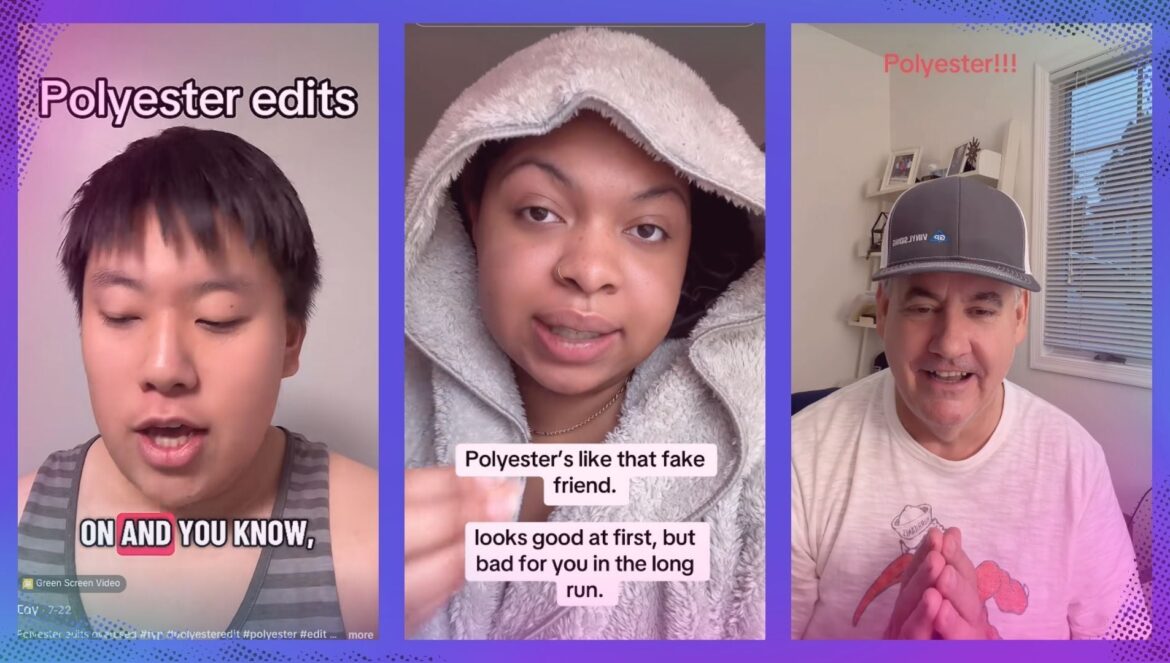


Nobody online wants to be polyester right now.
That is not a compliment.
According to the Gen-Z lexicon, something “polyester” is a way of saying it feels cheap, mass-produced, low-effort, or inauthentic. It might look polished at first glance, but underneath the sheen, something about it feels artificial.
A generic influencer brand can be polyester. An overly polished video can be polyester. So can your relationship.
The insult draws on the fabric’s increasingly poor online reputation. Polyester is a synthetic fiber made from plastic, and younger shoppers have spent years complaining about finding it in expensive clothing, purging it from their closets, and searching for cotton, wool, and other natural materials instead.
Polyester is not necessarily low-quality — different versions of the material have legitimate uses, including in performance clothing — but online fashion discourse often treats the word as shorthand for the cheap, shiny fabric associated with fast fashion. That made it particularly effective as an insult for anything that looks manufactured or disposable.
Where did the polyester meme come from?
Before people had polyester lifestyles, TikTok had “polyester edits.” The term emerged around a style of aggressively edited fan video featuring characters such as Spider-Man and Iron Man. The videos layer poses over rapidly flashing footage, usually accompanied by metallic music and enough visual effects to make CapCut beg for mercy.
According to Know Your Meme, examples of the editing style appeared as early as October 2025. A pretty chaotic Spider-Man edit posted the following month later resurfaced and went viral in the summer of 2026. Viewers began calling videos in the format “polyester edits” to suggest they were flashy but cheaply made.
The insult quickly escaped editing circles. Streamers and influencers selling 100 percent polyester merchandise have been mocked for it, with LowTierGod earning the nickname “the Polyester Prince.” Creators have also parodied the stereotypical polyester wearer by assembling loud, all-over-print outfits involving galaxy pants, wolf shirts, and other relics of a deeply synthetic era.
From there, “polyester” became less about what something was made from and more about its overall spiritual composition.
The internet has a lot of ways to call you fake
The term joins a growing collection of online insults for anything perceived as fake, generic, or painfully uncool. Someone adopting an identity for attention might be accused of “larping.” A man carrying a tote bag and reading Joan Didion exclusively to impress women is “performative.” A celebrity whose success feels suspiciously manufactured is an “industry plant,” while a person with no original thoughts or tastes might be dismissed as an “NPC.”
But wait, there’s more! “Slop,” the internet’s preferred term for low-quality content churned out in bulk, especially with AI. Calling someone the “Temu version” of another person makes them a cheaply produced imitation, while “corny” remains the remarkably durable verdict for anyone visibly trying too hard. “Cheugy,” a personal favorite, similarly targets tastes that felt dated and overly curated, although using it now may itself be considered cheugy.
“Polyester” overlaps with all of them while adding a judgment about quality. Something can be genuine and still be polyester if it feels tacky, disposable, or assembled from whatever happens to be trending. It is “slop” with a fabric-composition label — or “Temu” without naming the store.
That makes it a useful insult for an internet increasingly filled with AI-generated posts, deepfakes, dropshipped products, and lifestyles seemingly designed by an algorithm. Of course, the more people use “polyester” to describe everything they dislike, the cheaper and more generic the insult itself will become.
Which would be extremely polyester.
Source: https://mashable.com/life/polyester-gen-z-slang-meaning-tiktok