Circle already keeps the yield generated from USDC reserves, meaning the proposed rule would just codify what the company already does.
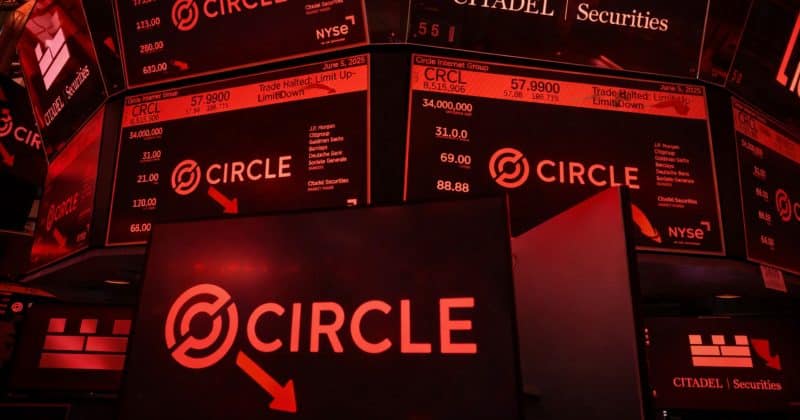
Circle Internet Group, issuer of USDC, the world’s second-largest stablecoin, saw $4.6 billion wiped from its market cap on March 24 when its CRCL stock fell by some 20%, closing at around $101 after opening the session above $126.
The trigger was a draft update to the CLARITY Act that sought to bar crypto platforms from passing stablecoin yield to their customers.
Sell-Off May Have Gotten Ahead of the Facts
As we reported yesterday, the latest proposal to the CLARITY Act stops digital asset firms from providing yield on stablecoins, either directly or indirectly. However, it still permits rewards based on user activity, like loyalty programs, promotional offers, or subscription perks, as long as U.S. regulators work together to decide what counts as acceptable rewards.
CRCL started the day trading at just over $126, then briefly went up to $127 before news of the draft update emerged. It then dipped to about $98.31, per Google Finance data, with an attempt at recovery unsuccessful as the stock only managed to climb as far as $101 before the session ended.
Following the 20% single-day dip, several market observers argued that the sell-off may have overstated the policy shift. One of them, MoonRock Capital founder Simon Dedic, wrote in a post on X that the decline looked like a “sell the news” event. He noted that insiders had already positioned ahead of the development during a six-week rally that saw CRCL go from around $50 to nearly $133.
According to him, the CLARITY Act, far from hurting Circle, actually hands the company a regulatory moat to preserve its existing model. He pointed out that Circle’s revenue structure is built on keeping the yield generated from USDC reserves, and under the new rules, it can maintain that model while pointing to the legislation as the reason it cannot pass yield through to users. Dedic called the setup “massively bullish for Circle,” also describing the drop in CRCL’s price as a potential entry point for investors with longer time horizons.
Growth specialist Jose Fabrega made a similar point, saying:
You may also like:
“USDC never paid you yield to begin with. Circle will be just as profitable and still has huge growth potential.”
He added that DeFi protocols and real-world asset platforms could actually be the biggest beneficiaries of the rule change, since yield-hungry capital would now need to flow through those channels instead of sitting in stablecoin accounts. Still, such a development could indirectly increase USDC demand.
Stablecoins Shifting Toward Utility
The broader stablecoin picture is not uniformly negative either. On-chain data cited by XWIN Research Japan shows stablecoin active addresses are at all-time highs, which points to growing real-world usage. If clear federal rules eventually arrive, that adoption trajectory could continue.
The case being made by the analysts is that stablecoins, stripped of their yield-bearing function, evolve into something more like financial infrastructure, which would be useful for payments, settlement, and collateral, rather than investment products.
Binance Free $600 (CryptoPotato Exclusive): Use this link to register a new account and receive $600 exclusive welcome offer on Binance (full details).
LIMITED OFFER for CryptoPotato readers at Bybit: Use this link to register and open a $500 FREE position on any coin!