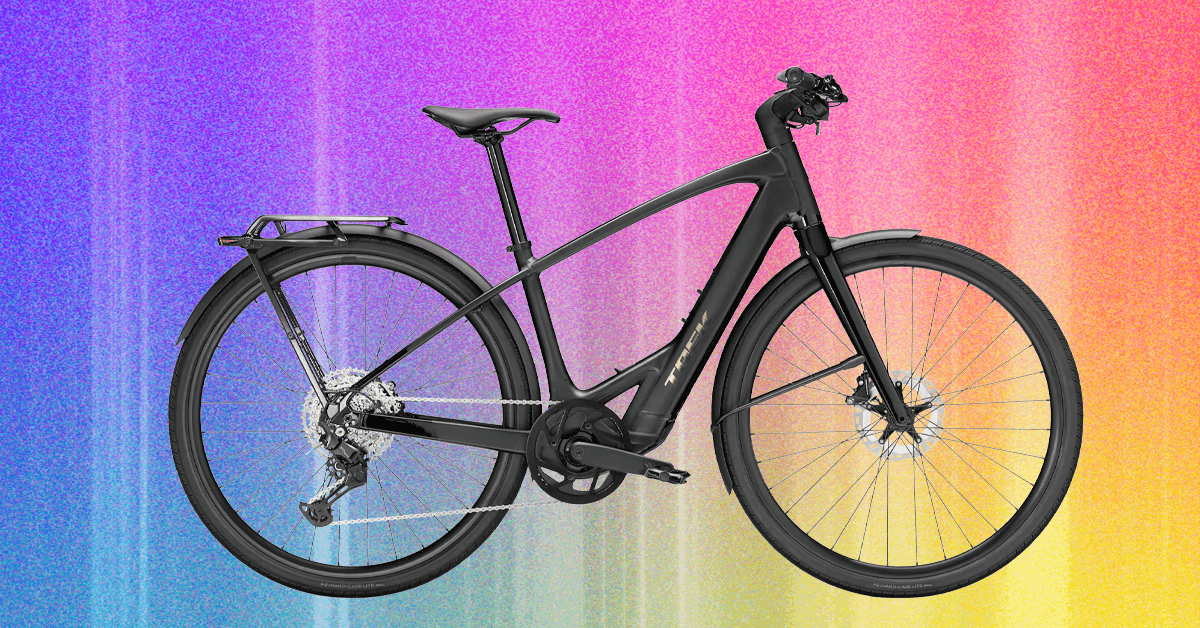
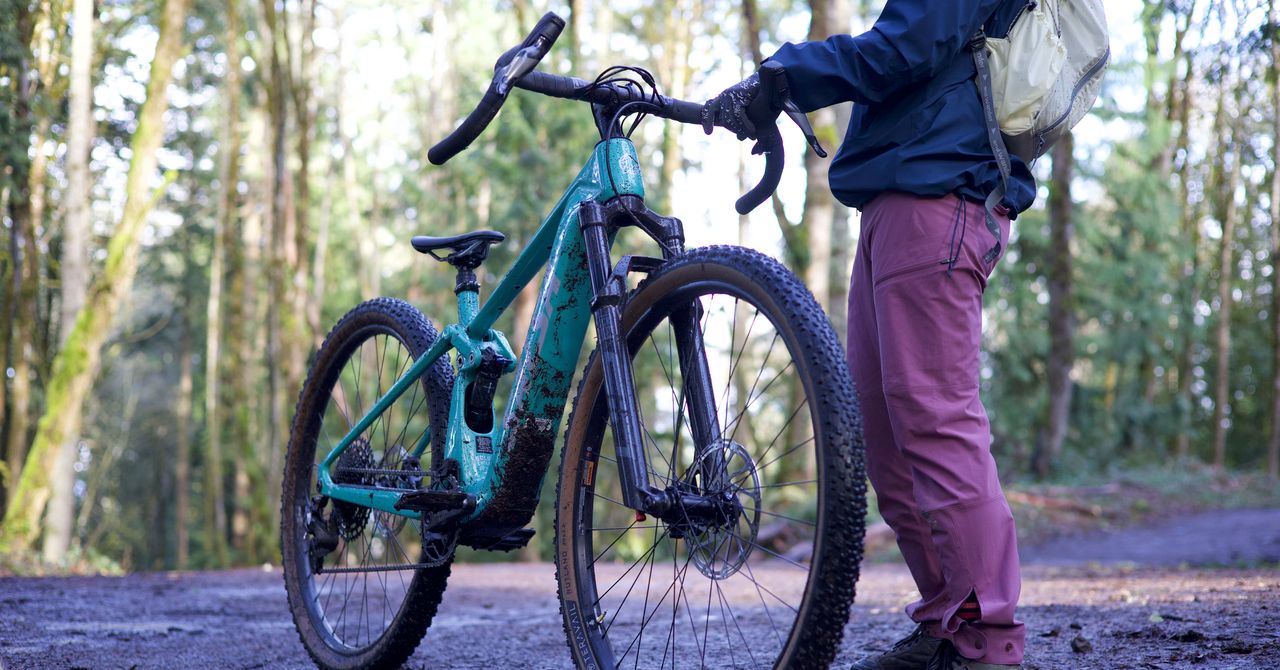
If you Ask any bike shop owner or manager if they fix electric bikes, you get an interesting array of stories.
“I know a guy who has lost a finger working on ebikes,” says MacKenzie Hardt, owner of Hardt Family Cyclery in Aurora, Colorado, and the former executive director of the nonprofit bike shop and community hub Bikes Together. Hardt has torn tendons in his own hand after accidentally triggering a cadence sensor that caused the wheel to spin out of control on the stand, even when the motor and battery were disconnected.
He now has a message on the company voicemail that informs customers the shop will not repair any ebike without third-party UL 2849 certification, the gold standard that certifies that an ebike’s entire package, from electrical drive train to battery to charger system, has been thoroughly tested. (Check out our guide to How to Buy an Electric Bike for more info.)
The Wild, Wild West
A lot of the problem in fixing ebikes is related to the fact that a surprising number of electric vehicles that are sold as ebikes are not, in fact, ebikes. According to PeopleForBikes, the third-party advocacy group, an ebike is a low-speed electric vehicle that “closely resembles traditional bicycles in their equipment, handling characteristic, size, and speed.”

A mechanic works on a bicycle.Photograph: Dikushin/Getty Images
In 46 states, all ebikes fall under a Class 1, 2, or 3 distinction. The distinction depends on the bike’s maximum motor-assisted speed and how it’s powered. However, many ebikes sold online are way more powerful than the maximum 28 mph speed allowed on a Class 3 ebike, and they operate more like a moped or even a motorcycle.
“That’s really the heart and soul of the service problem,” says Cory Oseland, manager of the Ski Hut, a high-end bike shop in Duluth, Minnesota. “Once you slide out of the three classes, you run into a lot of parts and equipment that aren’t part of the bike industry.”
Repairing an ebike can also land the shop in a quagmire of liability issues. As bike shops are part of the product liability chain, they can be held responsible if they so much as inflate a tire on an electric vehicle and the rider later injures themselves or another person. Ebike-related injuries have jumped more than 1,020 percent nationwide from 2020 to 2024, according to hospital data, so this is not an unforeseen occurrence. “I have known people who have lost their shirt,” says Hardt.
In most states, if the bike doesn’t fit the Class 1-3 classification system, the shop’s insurance will likely be null and void. The problem, says Hardt, is that “we don’t regulate nationally what an ebike is. What is legal here may not be legal somewhere else.” Working on an unregulated bike, he adds, “is like if somebody brought in a Tesla to fix.”