
Disclaimer: This article is for informational purposes only and does not constitute financial advice. BitPinas has no commercial relationship with any mentioned entity unless otherwise stated.
📬 Get the biggest crypto stories in the Philippines and Southeast Asia every week — subscribe to the BitPinas Newsletter.
“The Philippines will benefit the most in terms of stablecoins.”
This was the core message from David Hsiao, Chief Marketing Officer (CMO) of global payment settlement layer Morph, during a recent panel discussion at Morph Settle In! Manila.
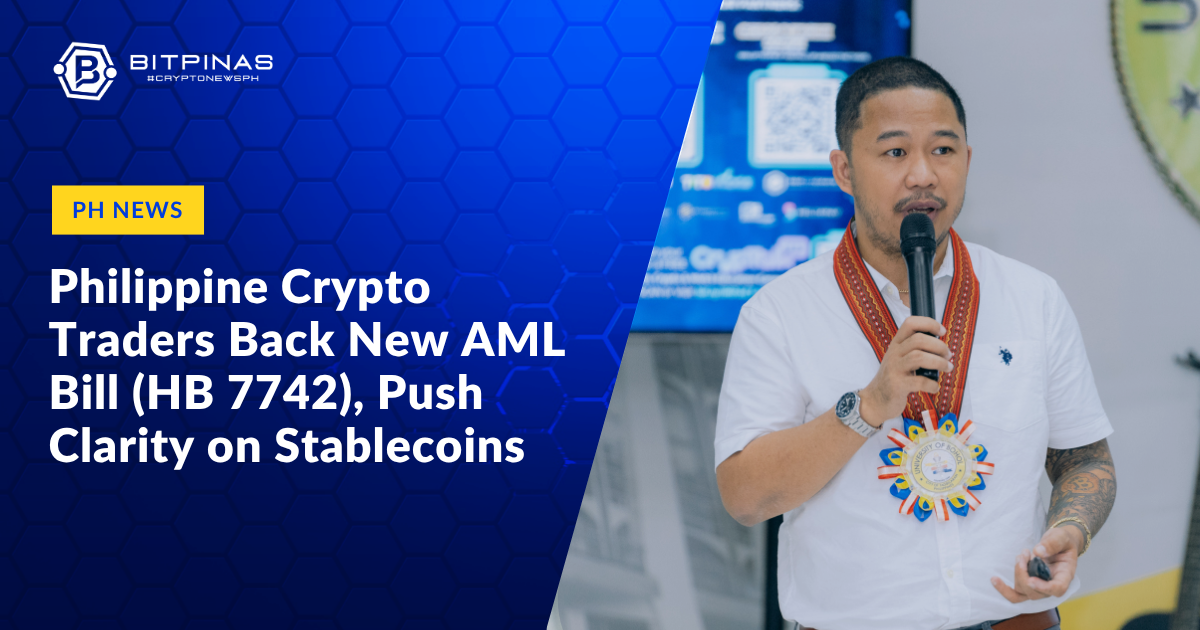
Organized by Morph and Bitget Web3 Wallet’s Blockchain4Her and Blockchain4Youth initiatives, the panel explored the future of cross-border payments. Hsiao was joined by Raymond Babst, CEO of locally licensed crypto exchange DA5, and Eliezer Rabadon, CEO of IT solutions provider DVCode. The discussion was moderated by Jose Antonio, acting Regional Director for Bitget Southeast Asia.
Why Stablecoin is Beneficial for PH Economy

Setting the stage, Antonio cited a Bangko Sentral ng Pilipinas (BSP) report indicating that cash remittances reached $3.2 billion between October 2024 and October 2025.
According to Hsiao, migrating these remittances to the blockchain offers massive economic advantages by drastically cutting transfer costs and increasing settlement speed.
“The Philippines is one of the countries and regions that stands to benefit the most from stablecoin technology whether it be lower costs or settlement speed.
Instead of paying 6% in fees, you’re paying fractions of a cent on the dollar. Those few percentage points translate to billions of dollars saved. That money goes straight back into the Filipino economy—buying an extra gift for a child or putting money towards healthcare.”
David Hsiao, Chief Marketing Officer, Morph
Hsiao added that Filipinos are uniquely positioned to adopt stablecoins because of their high digital literacy, citing the massive user bases of e-wallets like GCash (94 million) and Maya (60 million), as well as the country’s early adoption of Web3 games like Axie Infinity.
Rabadon echoed this, noting that the hardest part is already done, which is digital onboarding.
“I think Filipinos are already past the hurdle; we’re already here, we just haven’t realized it yet. What we need to do right now is let people realize that when they have a stablecoin or crypto, wherever they are, they can immediately pay a local order here in the Philippines right away.
The moment that realization is cascaded to the people, then we will really feel the impact of web3.”
Eliezer Rabadon, Chief Executive Officer, DVCode
The Target Market: OFWs and Freelancers

Babst, on the other hand, highlighted that the current regulatory framework by the BSP, specifically the Virtual Asset Service Provider license, is what makes the use of blockchain-based remittances and stablecoins ideal in the Philippines.
He also presented that the sector that will benefit the most is the Overseas Filipino Workers (OFWs). According to data from the Philippine Statistics Authority, there were 2.19 million recorded OFWs in 2024.
Rabadon added that aside from OFWs, Filipino freelancers and virtual assistants will also feel the benefits of receiving stablecoins as salary.
It should be noted that most blockchain-based remittances often utilize stablecoins, which are cryptocurrencies whose value is pegged to a fiat, usually the U.S. dollar.
The Bottlenecks: Interoperability

Despite the clear benefits, traditional remittance systems still dominate. The panel identified two major hurdles preventing wider stablecoin adoption:
Lack of Interoperability
Hsiao stressed that current remittance systems lack interoperability, which is a standards-based approach to enabling different IT systems to exchange data and share functionality with minimal end-user intervention, as defined by IBM.
And while there are already APIs that are available on the internet, according to Rabadon, developers either lack knowledge or are afraid to launch their own projects because of another challenge he mentioned: regulation.
Regulatory Friction

Babst echoed this sentiment, sharing his experience that the industry can get “over-regulated,” which makes it challenging for some innovators trying to launch a product for cross-border payments.
“I’m coming from a company that’s heavily regulated; DA5 has six licenses, and we’re audited by different departments on a regular basis.
In the Philippines, you have the BSP that regulates entities like us, and then you have another entity like the Securities and Exchange Commission coming out with new regulations, like Crypto Asset Service Provider. You have to ask: is it hindering innovation, or is it supposed to protect the consumer? That’s always been the argument.”
Raymond Babst, Chief Executive Officer, DA5
The Path Forward: How to Achieve Mass Adoption

For Hsiao, there are two things that need to happen in the Philippines to be able to fully utilize stablecoins for remittances.
The first answer he gave is regulatory clarity. Hsiao explained that the national government would define what can be built, what the limits are, and what the applications should be submitted to be able to establish a crypto project.
The second answer he gave is interoperability between issuers, developers, businesses, and the settlement layer, where he likened stablecoins to GPS.
“GPS was invented in the 1970s for the military, but it wasn’t until cell phones and the internet that it took off. Now we use it for Uber, Grab, ordering food, and Google Maps. “
David Hsiao, Chief Marketing Officer, Morph
Meanwhile, Rabadon gave emphasis on QRPh, the country’s national QR code standard for digital payments, where stablecoins should be used for the said initiative.
This idea could make adoption easier, according to Babst, because if it could be easier to transact, it will be used more often.
“When people see how easy it is to use a simple QR code to send a gift to family, they’ll realize they don’t need to understand what’s going on behind the scenes. All you need to do is load your wallet, on-ramp, and off-ramp. That’s where the exciting part comes in.”
Raymond Babst, Chief Executive Officer, DA5
Lastly, Babst said that adoption in the country will not depend on how big a company that made the initiative is, but about being user-friendly and offering an easy access.
“DA5 has learned in the last 20 years that you can’t do it alone. We built one of the largest networks with 25,000 OTC branches, but the game has changed. It’s not about physical branches anymore; it’s about getting millions of users on an app that’s easy enough for your Lola, Lolo, Tito, and Tita to use without having a hard time.
We are good at regulatory compliance, but to push cross-border payments globally, you need great tech partners present all over the world.”
Raymond Babst, Chief Executive Officer, DA5
This article is published on BitPinas: ‘The Philippines Will Benefit Most’: Tech Leaders Push for Stablecoin Remittances at Morph Manila Panel
What else is happening in Crypto Philippines and beyond?