
Key takeaways
- Robotics should prioritize data collection to optimize performance and decision-making.
- Industries like energy and defense are increasingly leveraging robotics for operational efficiency.
- The future of robotics is promising, but safety and reliability through determinism are crucial.
- Consolidation around Nvidia limits hardware diversity, impacting AI development.
- Robotics can enhance efficiency in industries with high energy costs and frequent shutdowns.
- GPUs have become vital for scaling AI applications, especially in chat-based models.
- Fragmentation in hardware compatibility is due to proprietary software systems.
- CUDA is outdated for modern systems, indicating a need for updated GPU software.
- Heterogeneous systems enhance computing flexibility and scalability.
- Enterprises seek hardware flexibility to avoid vendor lock-in.
- The pragmatic impact of AI and robotics is a focus for sectors like energy and defense.
- Determinism in robotics ensures safety and reliability in AI applications.
- The rise of chat-based models has driven GPU importance in AI.
Guest intro
Jake Loosararian is the CEO and co-founder of Gecko Robotics, a company deploying purpose-built robots and AI for mission-critical infrastructure inspection across energy, defense, and manufacturing. In 2012 as a student at Grove City College, he built his first wall-climbing robot in a dorm room to solve persistent downtime at a local power plant, launching the company in 2013. Gecko now manages over 500,000 critical assets for Fortune 100 partners and the US Air Force and Navy, reaching unicorn status with a $1.25 billion valuation in June 2025.
The role of data in robotics
-
The idea of gathering information and data using robotics to help drive better outcomes
— Jake Loosararian
- Robots should not be built just for the sake of building; they must serve a purpose in data collection.
- Data-driven robotics can prevent a commoditized future in the industry.
-
If you’re building robots just to build robots… it leads to a commoditized future
— Jake Loosararian
- Understanding the role of data is crucial for optimizing infrastructure performance.
- Robotics in infrastructure is about improving decision-making through data.
-
The pragmatic impact of artificial intelligence… can potentially drive better decisions
— Jake Loosararian
- Data collection is essential for enhancing operational efficiency in critical sectors.
Robotics in energy and defense
- Energy, oil, gas, and defense sectors focus on the pragmatic impact of robotics.
-
The energy, oil and gas companies… are completely looking at how impactful can robotics be
— Jake Loosararian
- Robotics and AI integration is enhancing operational efficiency in these industries.
- The defense sector is exploring robotics for improved decision-making.
-
The department of war are completely looking at how impactful can robotics be
— Jake Loosararian
- Robotics helps address challenges in industries with high energy costs.
-
Robotics can significantly improve operational efficiency in industries facing high energy costs
— Jake Loosararian
- The focus is on how robotics can drive better outcomes in energy and defense.
Future of robotics and determinism
- The future of robotics is optimistic but requires a focus on determinism.
-
I am very excited and optimistic about… what the future will be with robotics
— Jake Loosararian
- Determinism ensures safety and reliability in robotics applications.
-
The key is being deterministic… that’s maybe where we’re lacking a bit
— Jake Loosararian
- Safety and reliability are critical in the rapidly evolving field of robotics.
- Determinism balances innovation and safety in robotics.
- The focus on determinism addresses potential safety concerns in AI.
- Ensuring reliability in robotics is crucial for future advancements.
Hardware diversity and Nvidia’s dominance
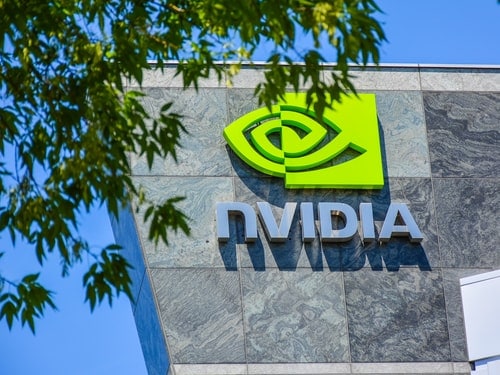
- The consolidation around Nvidia limits hardware diversity in AI development.
-
A lot of the world is really consolidated around the Nvidia platform
— Jake Loosararian
- There is a need for more hardware vendors to foster innovation in AI.
-
We want more hardware vendors in the space
— Jake Loosararian
- Nvidia’s dominance impacts the diversity of AI hardware options.
- Hardware diversity is crucial for fostering innovation in AI.
- The current landscape of AI hardware needs more competition.
- Consolidation limits the potential for diverse AI hardware solutions.
The importance of GPUs in AI
- GPUs have become essential for scaling AI applications.
-
GPUs have captured the world… the inference side of it is huge
— Jake Loosararian
- The rise of chat-based models has driven the importance of GPUs.
- GPUs enhance computational capabilities in AI technologies.
- The role of GPUs is critical for inference tasks in AI.
- The evolution of AI technologies has increased the demand for GPUs.
- GPUs are vital for enhancing AI computational power.
- The importance of GPUs in AI continues to grow with technological advancements.
Fragmentation in hardware compatibility
- Fragmentation arises from the lack of a unifying software layer.
-
Hardware companies don’t get along… they build software for their chips
— Jake Loosararian
- Proprietary systems contribute to hardware compatibility issues.
- The competitive dynamics between hardware companies lead to fragmentation.
- Proprietary software solutions impact industry fragmentation.
- Compatibility issues arise from the lack of a unified approach.
- The impact of proprietary software on hardware systems is significant.
- Fragmentation affects the overall efficiency of hardware systems.
The need for updated GPU software
- CUDA is outdated for modern systems and generative AI.
-
CUDA… is the shining star of system software for GPUs but it’s 20 years old
— Jake Loosararian
- There is a need for innovation in GPU software for current technology trends.
- Existing GPU software may not meet the requirements of modern advancements.
- The relevance of CUDA is questioned in the context of new technologies.
- Modern systems require updated GPU software solutions.
- The evolution of technology demands innovation in GPU software.
- The need for updated software is critical for advancing AI capabilities.
Heterogeneous systems in computing
- Heterogeneous systems enhance flexibility and scalability in computing.
-
You get these heterogeneous systems where you have different architectures
— Jake Loosararian
- Different hardware architectures communicating enhances computing capabilities.
- Heterogeneous systems are vital for modern computing architecture.
- The impact of heterogeneous systems on enterprise flexibility is significant.
- Enterprises benefit from the flexibility offered by heterogeneous systems.
- The shift in computing architecture influences technology investments.
- Heterogeneous systems play a key role in future computing developments.
Avoiding vendor lock-in with hardware choices
- Enterprises desire the ability to choose between different hardware systems.
-
It gives enterprises choice… they want choice to be able to adopt other systems
— Jake Loosararian
- Avoiding vendor lock-in is a critical concern for enterprises.
- Flexibility in technology choices is essential for enterprises.
- Enterprises seek to avoid dependency on a single hardware vendor.
- The ability to choose different systems enhances enterprise flexibility.
- Vendor lock-in poses challenges for technology adoption.
- Enterprises prioritize flexibility in hardware choices to enhance innovation.