
Key Takeaways:
- Bitcoin’s August 2026 eCash hard fork will distribute 1:1 tokens to holders, including Strategy’s 818,334 BTC worth billions.
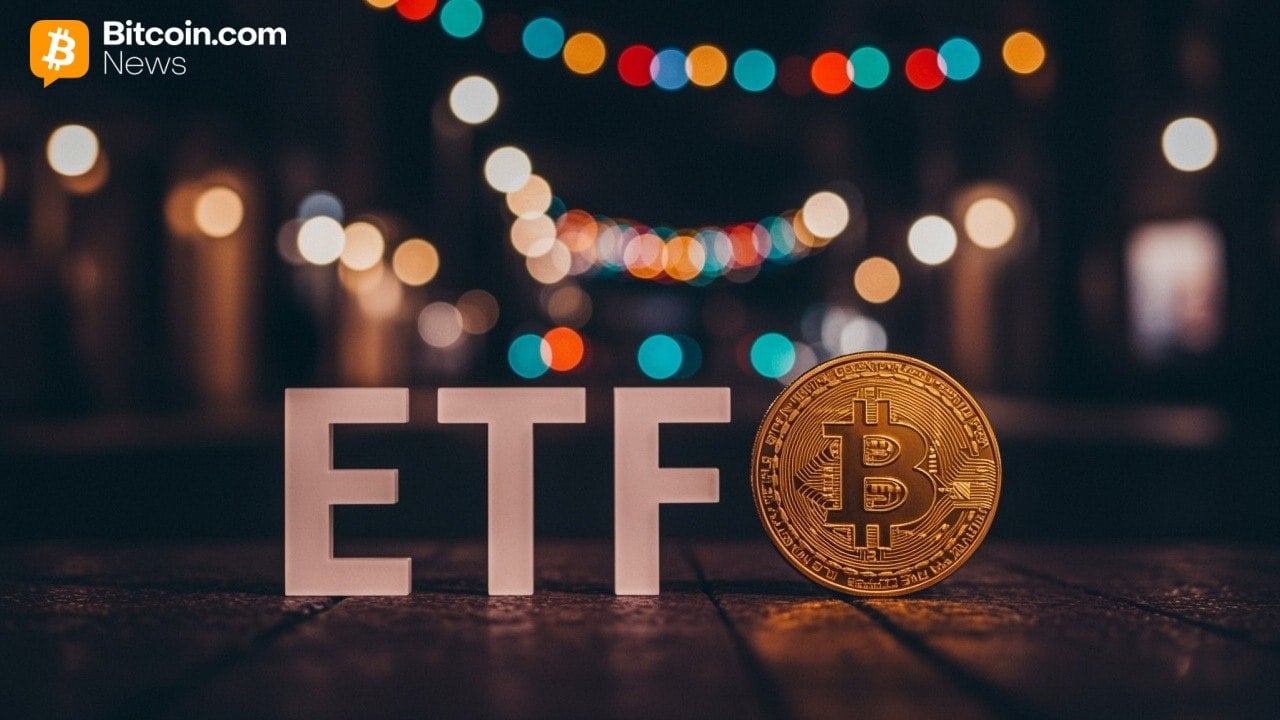
- Spot bitcoin ETFs holding over 1 million BTC are bound by prospectus language to handle forked assets in a specific manner.
- Paul Sztorc’s Drivechain-powered eCash chain faces its first institutional stress test, with custodians, boards, and the SEC all watching.
Massive Bitcoin Fork Looms With Stakes Higher Than Ever Before
The fork is called eCash, proposed by developer Paul Sztorc and targeted for activation near block 964,000. It is a near-copy of Bitcoin Core using the same SHA-256d mining algorithm with a one-time difficulty reset at launch. Every bitcoin holder receives a 1:1 airdrop of eCash tokens at the chain split.
Hold 4.19 BTC, receive 4.19 eCash. The chain then activates seven Drivechain-style layer two ( L2) sidechains via BIP300 and BIP301, designed to support decentralized exchange ( DEX) platforms, privacy features modeled after Zcash, prediction markets, non-fungible token ( NFT) infrastructure, identity tools, and quantum-resistant protections.
The technical proposal is aggressive. The scale of who holds BTC today makes it historic.
Strategy (Nasdaq: MSTR), formerly Microstrategy, holds 818,334 BTC on its balance sheet as of late April 2026, making it the single largest corporate holder in the world. Public companies collectively hold approximately 1.218 million BTC, according to bitcointreasuries.net. Spot bitcoin ETFs, led by Blackrock’s IBIT, hold more than 1 million BTC in aggregate.
Coinbase custodies roughly 80% to 84% of all U.S. spot bitcoin ETF assets, a concentration that makes one firm’s compliance decision a chokepoint for the entire institutional side of any fork. The other stack of ETF BTC sits with the likes of Fidelity Digital Assets’ custody solution.
No prior Bitcoin fork landed in this environment. The 2017 Bitcoin Cash ( BCH) split happened when the asset was primarily retail-held and exchange-custodied. This specific hard fork arrives after spot ETFs launched, after Congress held hearings on bitcoin reserve policy, and after dozens of public companies added BTC to their balance sheets.
The mechanics of the 1:1 airdrop appear clean on the surface. In practice, they collide with fiduciary duty, Securities and Exchange Commission (SEC) disclosure requirements, tax law, and prospectus language that was written specifically to manage forked assets. Nearly all major U.S. spot bitcoin ETF filings include explicit language concerning any hard fork or airdrop event.
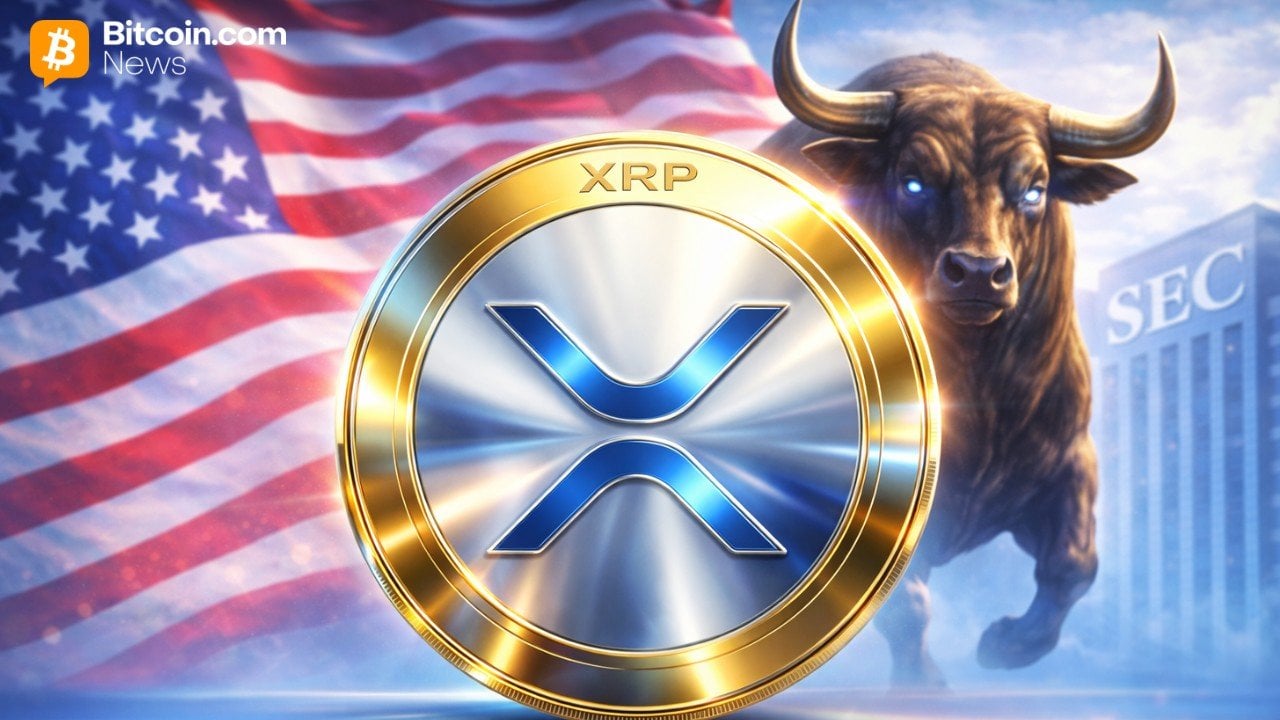
The sponsor alone determines which chain qualifies as “ bitcoin” for the trust. Blackrock’s IBIT, Ark Invest’s ARKB, Grayscale‘s GBTC, and Morgan Stanley‘s MSBT all carry variations of this policy. Coinbase, as custodian, will likely follow the sponsor’s policy for ETF trusts regardless of its own evaluation process. Blackrock’s IBIT process on a fork states:
“From time to time, the Trust may be entitled to or come into possession of rights to acquire, or otherwise establish dominion and control over, any digital asset (for avoidance of doubt, other than bitcoin) or other asset or right, which rights are incident to the Trust’s ownership of bitcoins and arise without any action of the Trust, or of the Sponsor or Delaware Trustee on behalf of the Trust (‘Incidental Rights’) and/or digital assets, or other assets or rights, acquired by the Trust through the exercise … of any Incidental Right (‘IR Digital Asset’) by virtue of its ownership of bitcoins, generally through a fork in the Bitcoin blockchain, an airdrop offered to holders of bitcoins or other similar event.”
Meaningful Decisions to Be Made
If eCash reaches meaningful value after launch, ETF managers will have legal decisions to make. Self-custody holders, direct corporate treasuries, and anyone holding BTC through exchanges that support the split capture the full airdrop will see things differently. The disparity is structural and immediate.
Strategy faces a different calculus. As a company that holds BTC directly on its balance sheet, with Coinbase as the custodian, it controls the claim. If it accepts the eCash allocation from 818,334 BTC, the tax and accounting consequences alone require public disclosure. The IRS Revenue Ruling 2019-24 treats airdrops from hard forks as ordinary income when the holder gains dominion and control.
Claiming hundreds of thousands of eCash tokens at any meaningful price triggers a taxable event that auditors, board members, and shareholders will need to address. Ignoring the airdrop requires its own explanation. Neither path is quiet.
There is also a specific controversy baked into the eCash chain design. The ledger is copied 1:1 at the fork, but approximately 500,000 to 600,000 of the roughly 1.1 million dormant coins tied to Satoshi Nakamoto through the so-called Patoshi pattern will be manually reassigned on the new chain to early investors, developers, and project funders. While critics call this controversial, Sztorc has explained on several occasions that this has zero effect on Nakamoto’s bitcoins.
The move to assign Nakamoto’s coins adds spice to the mix, but this fork has many more elements that may cause an institutional spectacle, to say the least. With the institutional scale of the airdrop, any meaningful price discovery in eCash becomes mainstream financial news.
If Drivechains deliver functional scaling and privacy infrastructure, institutional actors or their clients may engage with eCash as a working product. Institutional actors may also sell the eCash right away and stock up on more bitcoin (BTC). These scenarios have never been tested with ETF and corporate treasury capital in the picture. If institutions that do claim their allocation sell immediately, the sell pressure is proportional to their holdings, and the notional supply is large enough to move markets.
Most Bitcoin forks fail. Bitcoin Gold, Bitcoin Diamond, and dozens of others collapsed within months of launch. Bitcoin Cash ( BCH) has survived but commands a fraction of BTC’s value. At the same time, BCH is within the top 20 coins, positioned at 12, according to coinmarketcap.com stats on April 29. Besides BCH, most other Bitcoin forks are barely blips on the crypto ecosystem radar in terms of valuation. The pattern of mostly failed attempts is not encouraging for any new fork.
But eCash arrives with one variable none of those had: the dollar scale of institutional exposure forces decisions that cannot be deferred. ETF sponsors cannot quietly wait. Corporate boards face disclosure obligations. Exchanges must choose listing policies before the block height arrives. Tax attorneys and auditors are already mapping the event. In addition to this, Bitcoin has not seen a fork of this magnitude in years.
One measure of eCash’s potential ceiling: with Bitcoin above $75,000, a single eCash token priced at 10% of bitcoin’s value would be worth approximately $7,500. Strategy’s 818,334 BTC position would generate an eCash allocation with a notional value of billions at that price. The actual market price will depend on liquidity, exchange support, and whether Drivechains attract real usage, but the arithmetic alone explains why compliance departments will be paying attention.
August 2026 is not just a block height. For the first time in Bitcoin’s history, a hard fork arrives as a forced decision point for Wall Street infrastructure. The outcome, whatever it is, will land with full force across markets, systems, and balance sheets.