The internet was built to move information instantly. It was never built to move money.
For decades, developers leaned on external gateways, API keys, subscription portals, and centralized intermediaries to monetize digital services. The web evolved into APIs, AI agents, and machine-to-machine systems. Payments stayed bolted on from the outside.
That is the gap x402 closes.
Paul Soliman is the Founder and CEO/CTO of Hacktiv Colab Inc. and Chairman and Group CEO of BayaniChain, where he leads initiatives in blockchain, enterprise tech, and digital nation-building. He also serves as CTO of Blockfy, driving innovation in decentralized finance solutions in the Philippines.
What x402 Is
x402 is an open payment protocol that activates the long-dormant HTTP status code:
402 Payment Required
HTTP 402 was reserved in the HTTP/1.1 specification in 1991. The infrastructure to support fast, programmable, low-cost settlement did not exist then. Stablecoins, fast settlement chains, and signature-based payment authorizations now make it viable.
x402 was created by Coinbase and open-sourced in May 2025. On April 2, 2026, Coinbase contributed the protocol to the Linux Foundation, which launched the x402 Foundation as the neutral governing body. Initial participants include Cloudflare, Stripe, Google, AWS, Microsoft, Visa, Mastercard, Shopify, Circle, Solana Foundation, and Polygon Labs.
The protocol lets any website, API, or AI agent request payment directly through standard HTTP. No checkout page. No account creation. The server simply responds:
Payment required before access is granted.
The client signs a payment, attaches proof to the request, and gains access. Payments become a native part of the protocol layer.
How It Works
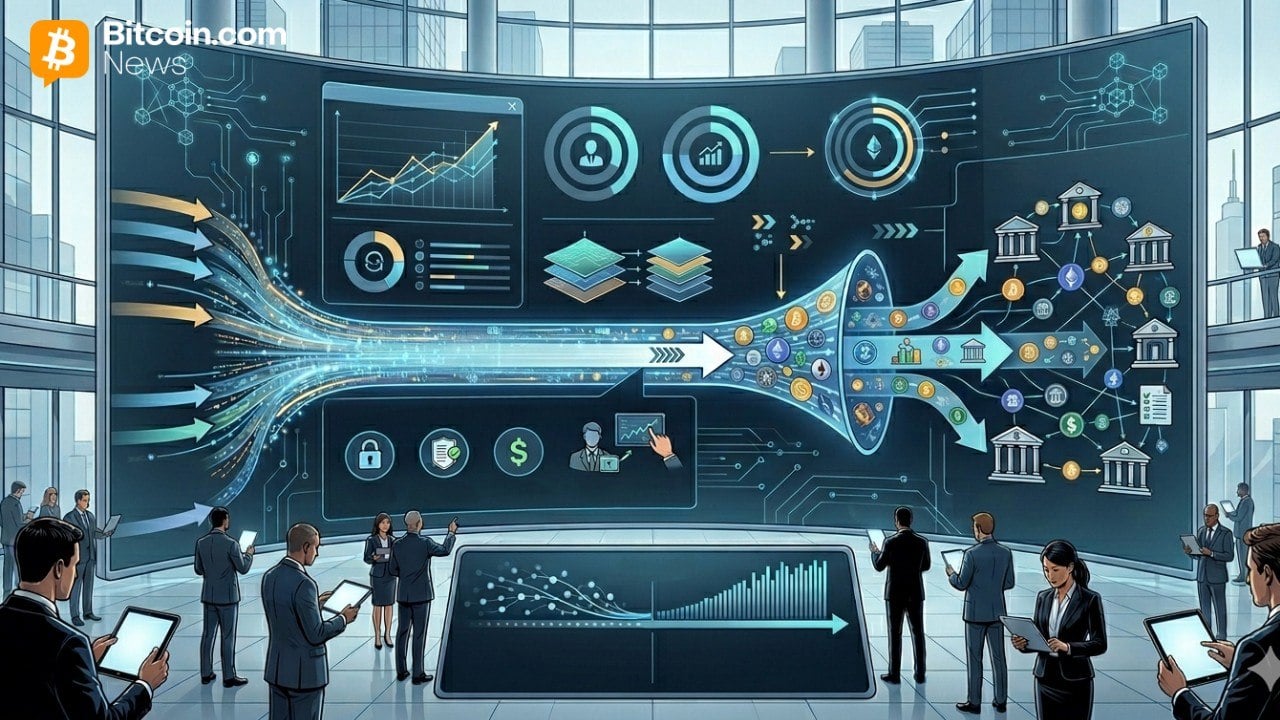
The flow is one extra round trip on top of normal HTTP.
1. Request.
A client, application, or AI agent requests a paid resource: API access, premium data, AI inference, compute, content, or another agent’s service.
2. 402 Response.
The server returns HTTP 402 with a PAYMENT-REQUIRED header carrying a JSON envelope: amount, accepted token, network, destination, and terms.
3. Payment Authorization.
The client constructs a signed payment payload, typically using EIP-3009 for USDC or Permit2 for other ERC-20s. On Solana, the equivalent signing flow applies.
4. Verification.
The client retries with a PAYMENT-SIGNATURE (or X-PAYMENT) header. The server forwards the payload to a facilitator for verification and settlement.
5. Access.
Once settled, the server returns 200 OK with the resource and a PAYMENT-RESPONSE confirmation header.
On Base, end-to-end latency typically lands inside three or four seconds. On Solana, sub-second finality is normal.
Why x402 Matters

x402 is not just another crypto payment rail. It introduces internet-native value exchange. For the first time, payments are as programmable and frictionless as HTTP requests themselves.
The implications are structural.
- Native internet payments. Settlement happens inside the request-response cycle. No portal, no redirect.
- AI agent compatibility. Agents can autonomously pay for APIs, compute, data, storage, and other agents. This is the foundation of machine-to-machine commerce.
- Practical micropayments. Traditional rails cannot price sub-cent transactions. x402 enables pay-per-request APIs, fractional content access, per-second compute billing, and usage-based monetization.
- No accounts, no cards. Wallets transact directly. The dependency on centralized payment onboarding disappears.
- Instant settlement. Stablecoins on fast chains settle globally in seconds.
- Open standard. Vendor-neutral governance under the Linux Foundation. Any developer, network, or service can build on it.
The Rise of Agentic Commerce
AI agents are no longer passive assistants. They discover services, negotiate prices, purchase resources, pay for execution, and coordinate with other agents.
Traditional payment systems do not fit this. Agents cannot fill out forms, manage subscriptions manually, or undergo human KYC flows at machine speed. x402 is the programmable payment layer this future requires.
By late April 2026, x402 had reached roughly 69,000 active agents, 165 million transactions, and around $50 million in cumulative volume. Solana accounts for the majority of transaction volume to date.
Real Use Cases
- AI inference APIs. Per-request billing instead of monthly subscriptions.
- Pay-per-use cloud. Compute and storage consumed and billed dynamically.
- Data monetization. Datasets and premium feeds sold instantly through API calls.
- Autonomous agents. Agents purchase research, compute, browser sessions, specialized tools, and verification services without human intervention.
- Content monetization. Writers and publishers charge fractional amounts for article access without locking readers into subscriptions.
The Stack Underneath
x402 is blockchain-neutral. Current production implementations run on Base, Polygon, Arbitrum, World Chain, and Solana. Coinbase Developer Platform hosts a facilitator that processes ERC-20 payments via EIP-3009 (USDC, EURC) or Permit2.
The protocol is also network, token, and currency agnostic by design. x402 may extend to fiat-based networks, but the foundation is committed to never deprioritizing on-chain payments in favor of fiat.
What x402 Does Not Solve
x402 handles payment movement. It does not handle agent identity or authorization. Those sit on adjacent protocols:
- Google AP2 (Agent Payments Protocol) attaches a cryptographic mandate confirming a user delegated the action. Google has already integrated x402 into AP2 as its default stablecoin rail.
- Visa TAP (Trusted Agent Protocol), launched October 14, 2025, signs agent identity into HTTP request headers so merchants can verify the agent is real and authorized.
And the data layer below all of this:
- Anthropic’s Model Context Protocol (MCP), open-sourced November 2024 and donated to the Linux Foundation’s Agentic AI Foundation in December 2025, is the tool-and-data exposure standard. An MCP server can return 402 to monetize its tools without changing its JSON-RPC schema. This pairing — MCP for capability, x402 for settlement — is the operational stack for agentic commerce.
Security and Compliance
As autonomous payments scale, the harder questions surface:
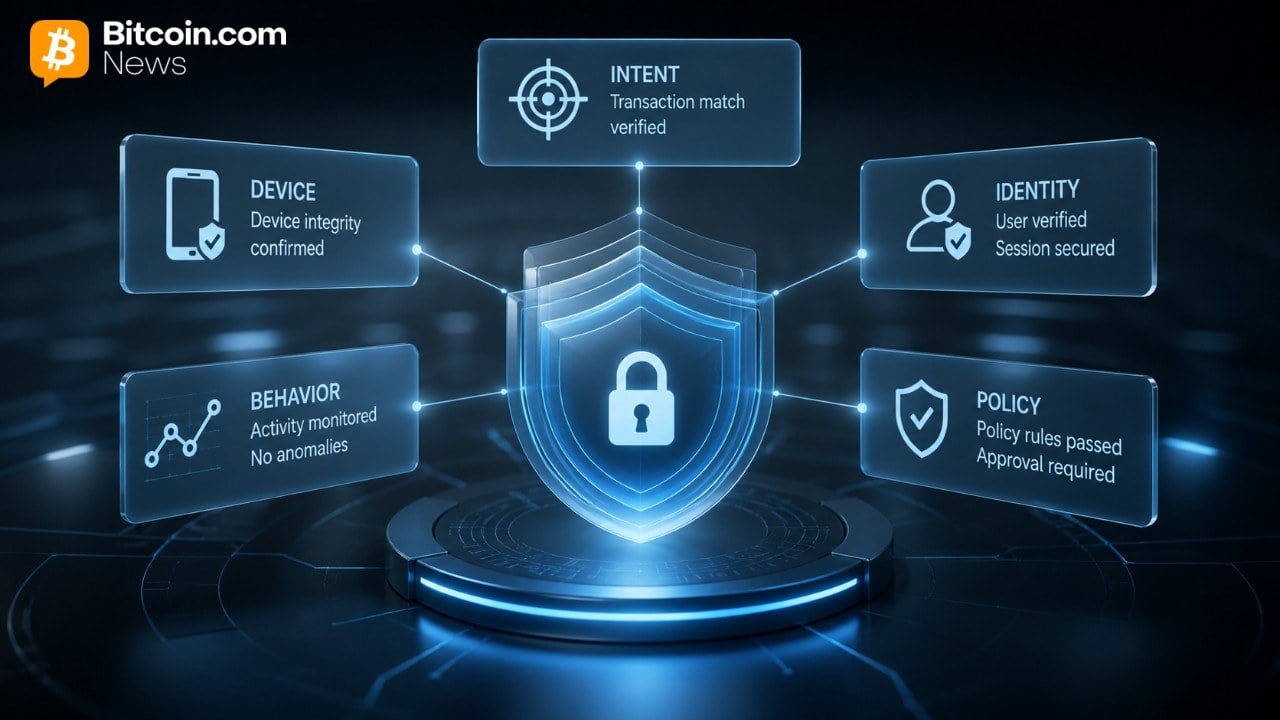
- Payment authorization security and replay prevention
- Spending policy enforcement at the agent level
- Privacy protection and PII filtering
- Compliance attestation and KYC where required
- Agent identity verification and ledger-based attestation
- Atomic execution guarantees
Active research and product work is already addressing these: TEE-assisted validation, policy-aware payment controls, optional attestations for sellers to enforce KYC or geographic restrictions, and pre-payment AI agent risk checks (x402-secure being one example).
This is where verifiable infrastructure stops being optional. Once agents move money autonomously, the audit trail cannot be assumed. It must be provable.
Challenges That Remain
- Wallet adoption. Mainstream users still default to cards.
- Regulatory uncertainty. Stablecoin and crypto payment rules vary by jurisdiction.
- Settlement infrastructure dependency. Performance is bounded by the underlying chain.
- Standardization gaps. True interoperability across providers is still maturing.
- User experience. Wallet management and signing must get simpler for mass adoption.
Why This Becomes Foundational
The web went from static pages, to dynamic applications, to cloud APIs, to AI-driven ecosystems. The next layer is autonomous economic interaction between machines.
x402 embeds value transfer directly into internet communication. HTTP standardized information exchange. x402 attempts to do the same for programmable value.
Where This Connects to Audit 3.0
For institutional truth infrastructure, x402 is more than a payment rail. It is a verifiable transactional event. Every 402 handshake produces a signed payload, a facilitator confirmation, and an on-chain settlement record. That is exactly the kind of cryptographically anchored event that an Audit 3.0 framework was designed to consume.
Lumen Agents operate at this seam. When an agent executes a verifiable action — invoice approval, credential issuance, document disclosure, payment settlement — the artifact must be provable, not asserted. x402 standardizes the payment-side artifact. MCP standardizes the capability-side artifact. Lumen Lens binds them into agent-to-agent operational records. Lumen Anchor commits the proofs.
The machine economy is not a payments story alone. It is a verifiability story. Payments are just the first surface where the lack of provable infrastructure becomes commercially expensive.
Final Thoughts
x402 is a rethinking of how economic activity happens on the internet. As agents, stablecoins, and programmable systems mature, the demand for frictionless, machine-native payments will only grow. The traditional model of accounts, subscriptions, and manual checkout no longer fits an autonomous digital economy.
If x402 succeeds, APIs become self-monetizing, agents transact independently, micropayments become normal, and value moves at internet speed.
Listen to our latest episode
The harder question — the one institutions will have to answer next — is not whether agents can pay. It is whether anyone can prove what they paid for, on whose behalf, and under what authority.
That is the layer above x402. That is the layer worth building.
References
This article is published on BitPinas: [Op-Ed] Paul Soliman: x402: The Internet’s Missing Native Payment Layer
What else is happening in Crypto Philippines and beyond?